 admin
admin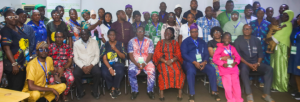
By, Olawale Ogunbusola
Researchers under the PALM-TREEs Project have called on government and policymakers to adopt data-driven policies to address climate change and its multidimensional poverty impacts.
The call was made during a two-day Project Validation and Policy Dialogue in Lagos held on the 8th and 9th of September, 2026.
The meeting was designed to brief the stakeholders on the implications of the research findings based on examination of climate data and the lived experiences of marginalized communities, which were affected by flooding and heat stress in Lagos.
The PALM-TREEs Project is co-funded by Canada’s International Development Research Centre and the UK’s Foreign, Commonwealth & Development Office. It is being implemented in Nigeria by Lead City University, Ibadan; University of Lagos; and the Nigerian Institute of Social and Economic Research, NISER, Ibadan.
Presenting findings, the Lead of team, Prof. Grace Oloukoi, Department of Urban and Regional Planning, Lead City University of Ibadan said 46.3 percent of surveyed households have high thermal housing vulnerability, while 47.2 percent experience moderate vulnerability. These are mostly found in the densely populated zones.
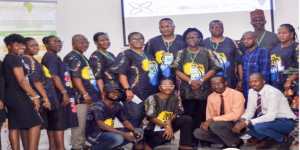
Prof. Mayowa Fasona and Prof. Vide Adedayo, Department of Geography, University of Lagos, emphasized the need to translate climate policies into practical, locally-driven action.
“The PALM-TREEs experience shows vulnerable communities possess valuable knowledge and adaptive capacity when supported by researchers, government and partners,” they said.
The project which began in 2024 also revealed that there is a need for coordinated efforts on drainage and river basin management, urban water access, livelihoods supports, climate information sharing and the inclusion of women and other marginalized groups in climate action.
They added that 95 percent of participants reported extreme heat between February and March, while 65 percent cited poor government response as a challenge. The team noted that flooding causes displacement, property loss and health risks, worsened by blocked drainage.
Also speaking, Professor of Policy and Research at NISER, Ibadan, Prof. Andrew Onwuemele, appealed to the Federal Government and other policymakers to implement policies that reach target audiences to reduce climate impacts and poverty among marginalized communities.

Residents and groups from 8 out of 20 LGAs in Lagos, including Iju,, Ogudu, Ago-Egun, Bariga, Somolu, Surulere, Agboyi, Kosofe and Epe who benefitted from the Palm-Trees Adaptation Solutions described the project’s interventions as timely boosters for farming productivity and fishing livelihoods.
The interventions include solar-powered borehole and supporting irrigation facilities, inverter-powered freezers, gazebo shades, gaari fryers, smoking kilns, fishing nets, assorted vegetable seeds and farm tools such as industrial hoes, cutlass wheelbarrows and sprayers.
